
House Rewires
Full or partial rewires for homes whose wiring has reached the end of its life, with straight answers about the disruption.
Wiring does not last forever. Insulation dries out, connections loosen, and decades of DIY extensions leave a tangle that nobody can fully trace. A rewire replaces the cables, accessories and usually the consumer unit, giving the house an installation built to today's standard. It is a big job, so we will only recommend it when it is genuinely needed.
Full or partial?
A full rewire replaces every circuit in the house. It makes sense when the cable throughout is old or failing, or when a renovation is stripping the house back anyway. A partial rewire replaces some circuits, for example the downstairs sockets and kitchen, or an extension wired off an old circuit, and keeps the parts that test well.
The deciding factor is the condition of the existing wiring, which an EICR will show. Our guide comparing a full and partial rewire goes into it in more depth.
Signs a house may need rewiring
- Old rubber-insulated or lead-sheathed cable. Rubber insulation becomes brittle and crumbles, and lead-sheathed cable dates from before the 1960s. Either is a strong sign the wiring has had its day.
- Black, round-pin or Bakelite sockets and switches, or round-pin plugs anywhere in the house.
- Scorch marks around sockets or switches, or accessories that feel warm.
- Too few sockets, with extension leads and adaptors in most rooms.
- A mix of different cable types and no earthing to lighting circuits, common in homes that have been altered many times.
One of these alone does not prove a rewire is needed, but they are worth getting checked, especially in a house you have just bought.
Disruption and making good: the honest version
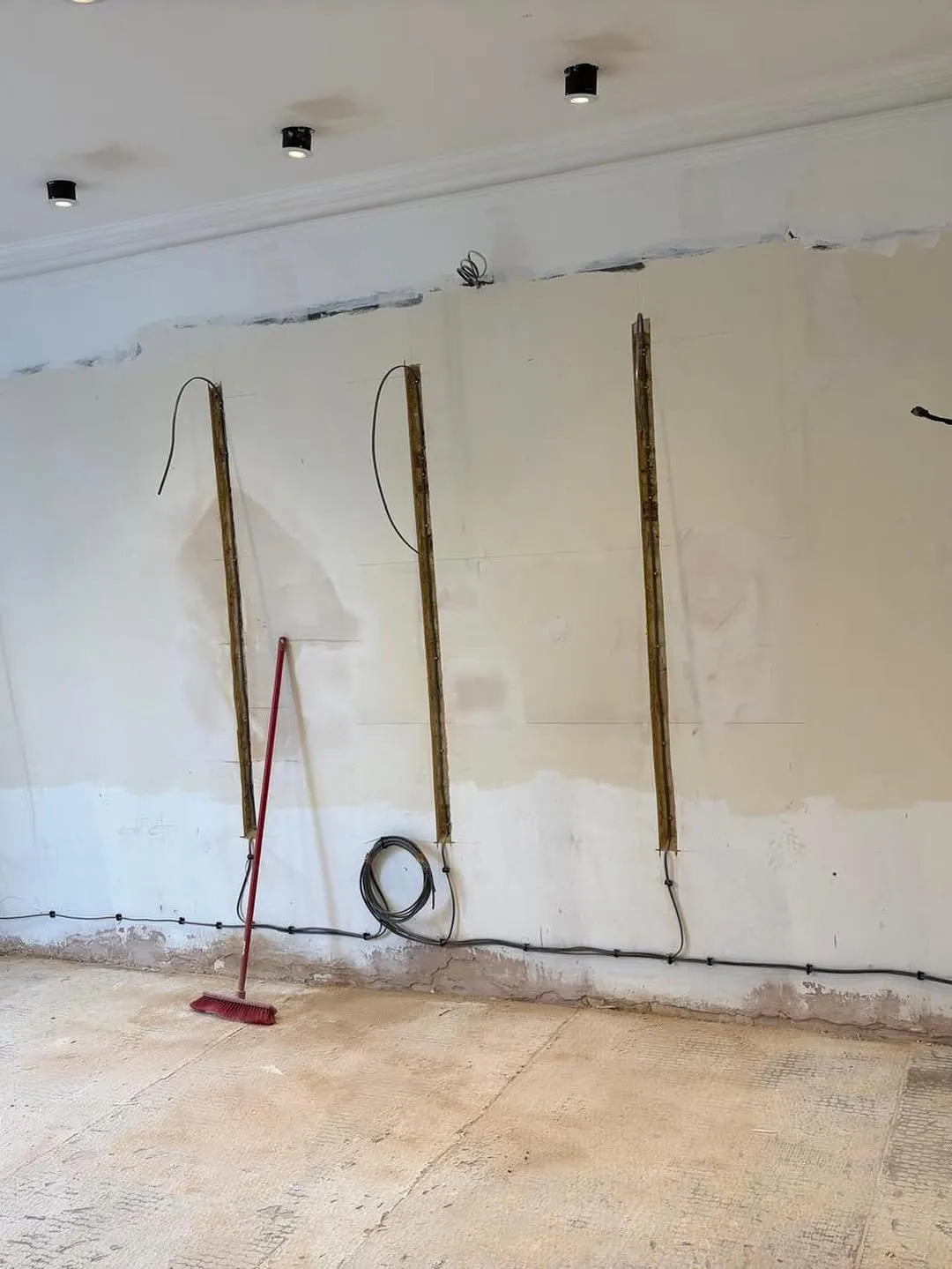
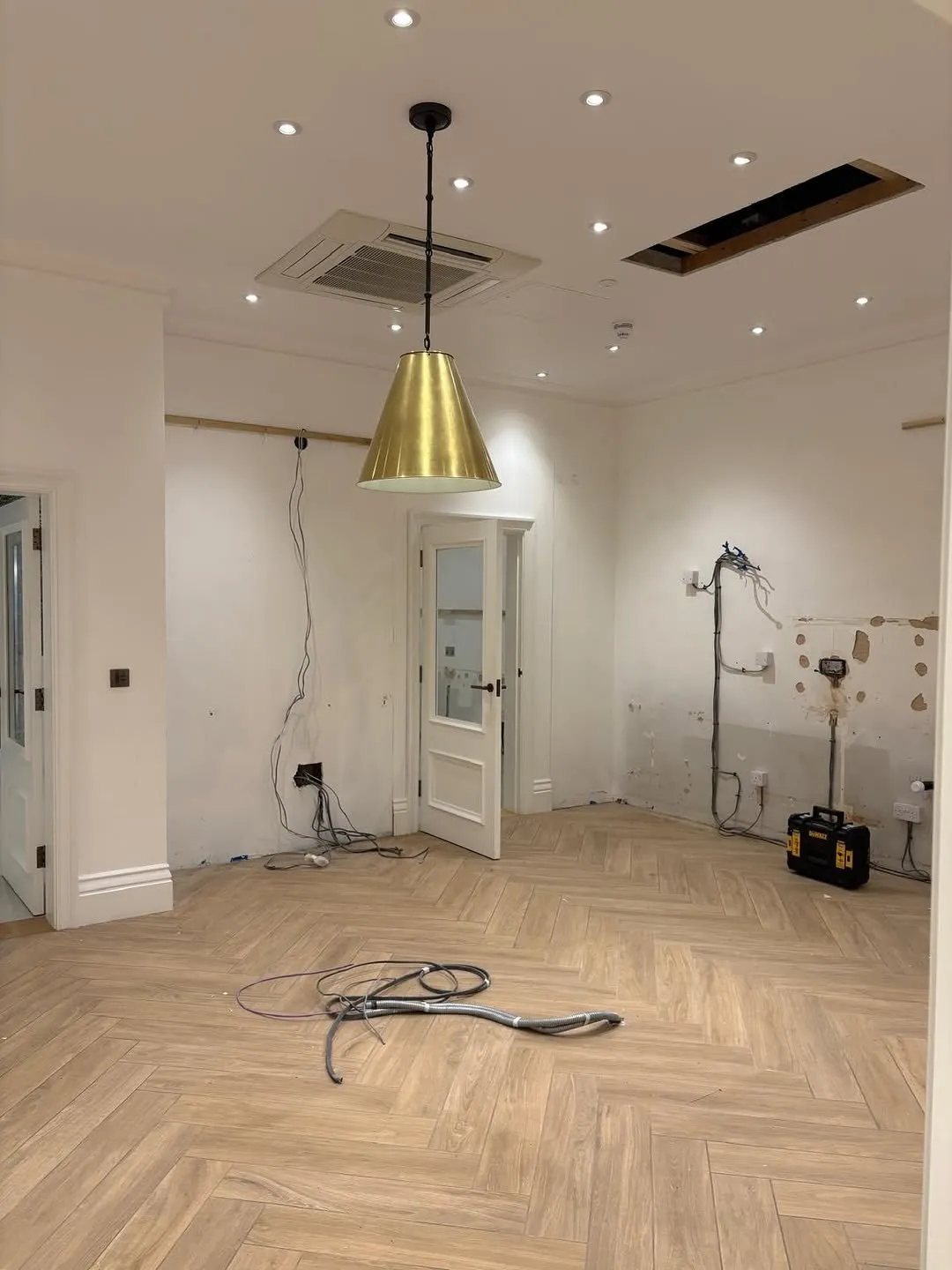
A rewire involves lifting floorboards, cutting chases into walls for new cables and boxes, and drilling through joists. We work tidily, use dust sheets, and put boards back securely, but walls will need filling and plastering afterwards and some decorating will be needed.
To be clear: plastering and decorating are separate from our work unless we have agreed otherwise in writing. We will leave the chases ready for a plasterer and can recommend timing so the plastering happens between our first and second fix. If you want us to arrange making good, ask, and it will be priced and written into the quote.
How the work is staged
First fix runs new cables and fits back boxes while walls and floors are open. After plastering, second fix fits the sockets, switches and lights, and the consumer unit is connected. Then the whole installation is tested and certified. How long that takes depends on the house; our guide on how long a rewire takes explains what affects it.
Plan it while the walls are open
A rewire is the best time to put sockets where you need them, add USB and outdoor sockets, move switches to sensible places and plan lighting properly. It costs far less now than once everything is plastered and painted. We will go through each room with you before first fix.
If you are unsure whether you need a rewire or just a new consumer unit, tell us what you are seeing and we can advise on the best first step.