
Commercial Electrical Testing
Periodic inspection and testing for offices, warehouses and units, planned so your business keeps running while it happens.
Every commercial electrical installation wears over time. Equipment gets moved, circuits get added, cables get knocked by trolleys and forklifts, and dust builds up in places it shouldn't. Periodic inspection and testing, recorded in an Electrical Installation Condition Report, is how you find out what state the installation is in before a problem finds you.
Fixed wire testing and the EICR
You may hear the work called "fixed wire testing", particularly from facilities managers, landlords and insurers. It is the same thing: the periodic inspection and testing of the fixed wiring in commercial premises, recorded in an Electrical Installation Condition Report (EICR). If someone asks for a fixed wire test certificate, the EICR is the document they mean.
Buildings we test
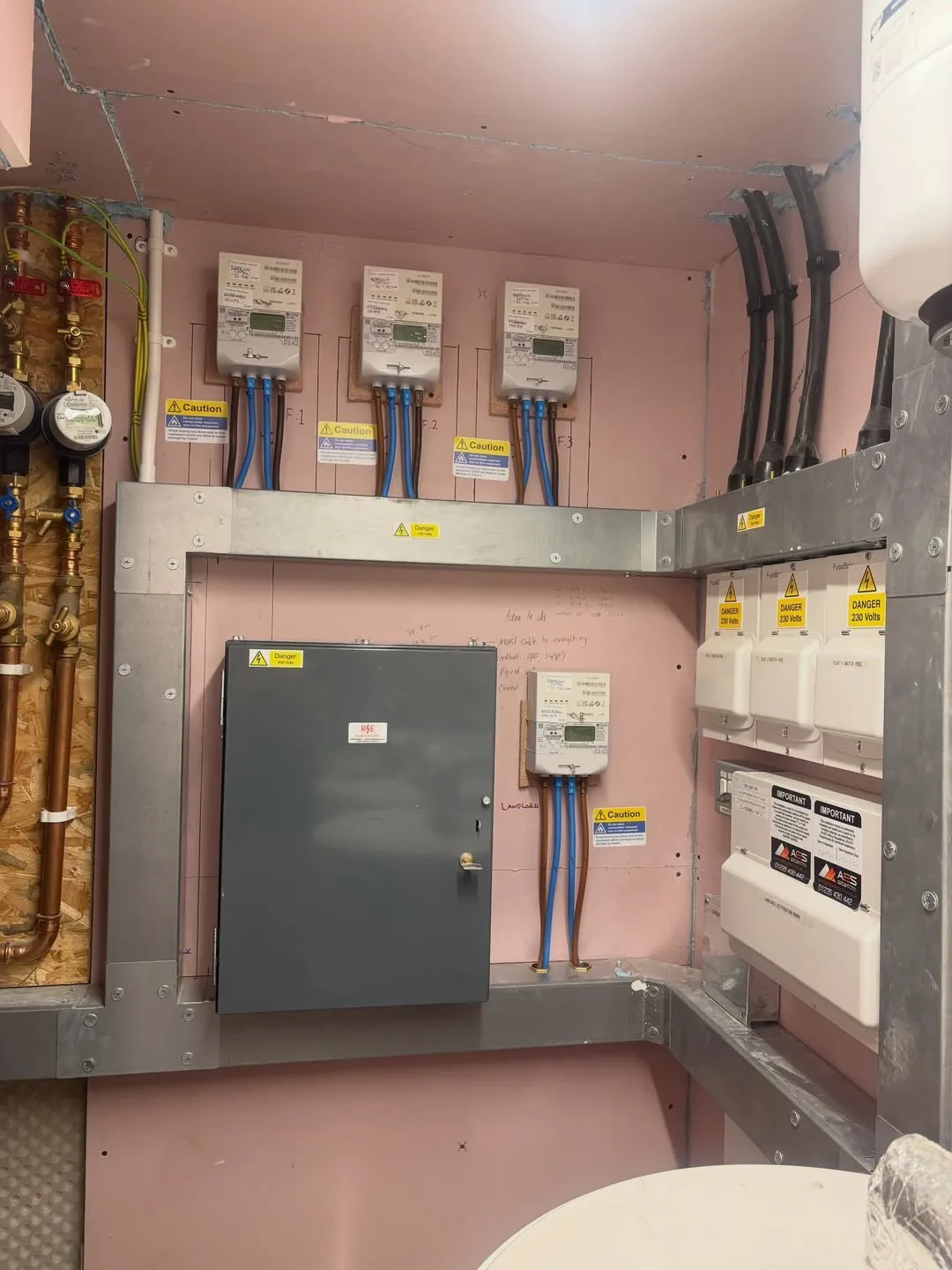
We carry out periodic testing in offices, warehouses, workshops, trade counters and units on business parks around Wantage, Abingdon, Didcot, Oxford and Swindon. Because we also install in these buildings, we know what to look for: overloaded distribution boards, undocumented sub-circuits, damaged containment and additions made without certification.
Testing around your operations
Testing means isolating circuits one at a time, and that is the part businesses worry about. We plan it with you:
- We agree which circuits feed critical equipment, such as servers, refrigeration, alarms or production machinery, and when those can be off, if at all.
- General lighting and small power are tested in a sequence that keeps most of the building working.
- Where testing a circuit would cause too much disruption, it can be recorded as a limitation and tested at an agreed later time.
- In shared buildings we coordinate with each occupier so nobody loses power unexpectedly.
Why insurers and landlords ask for reports
In general terms, a commercial landlord wants evidence the building they own is being looked after, and an insurer wants to know electrical risk is being managed. Both may ask for an up-to-date condition report, often at lease renewal or when a policy is renewed. Health and safety law also expects employers to maintain electrical systems so they don't cause danger, and regular inspection is the usual way of showing that. What any individual lease or policy requires is for you to check with your landlord or insurer.
What the report includes
The report records the extent of the inspection, any limitations, the test results for each circuit and a list of observations coded by urgency: C1 for danger present, C2 for potentially dangerous, C3 for improvement recommended and FI for further investigation. It gives an overall result and a recommended date for the next inspection. We also update circuit charts where they are missing or wrong, which helps everyone who works on the building afterwards.
Putting things right
If observations need action, we quote for the work and can prioritise it so the urgent items are done first and the rest is planned around your budget and operations. That might mean replacing a tired distribution board, adding RCD protection, or tidying containment in a warehouse. When alterations are part of a wider refurbishment, see office installations, or our builders and developers page if a contractor is involved.