
Consumer Unit (Fuse Box) Upgrades
The consumer unit is where every circuit in your home starts. A modern one can switch off a fault, or protect a person, in a fraction of a second.
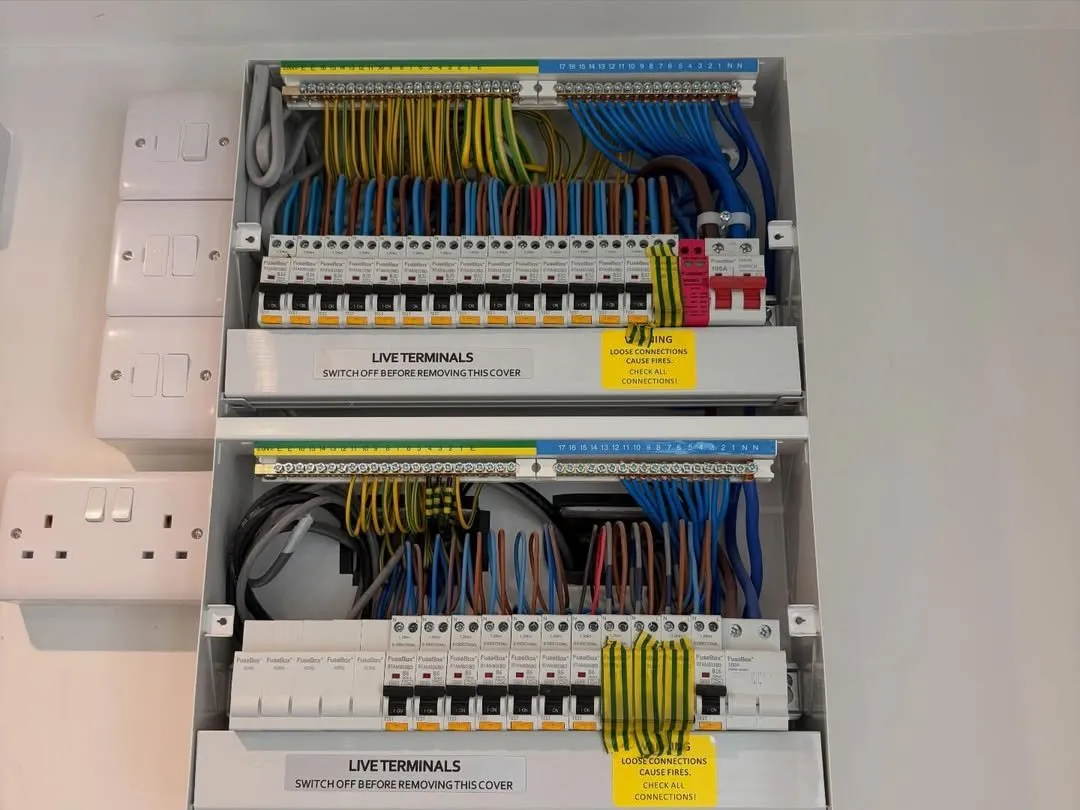
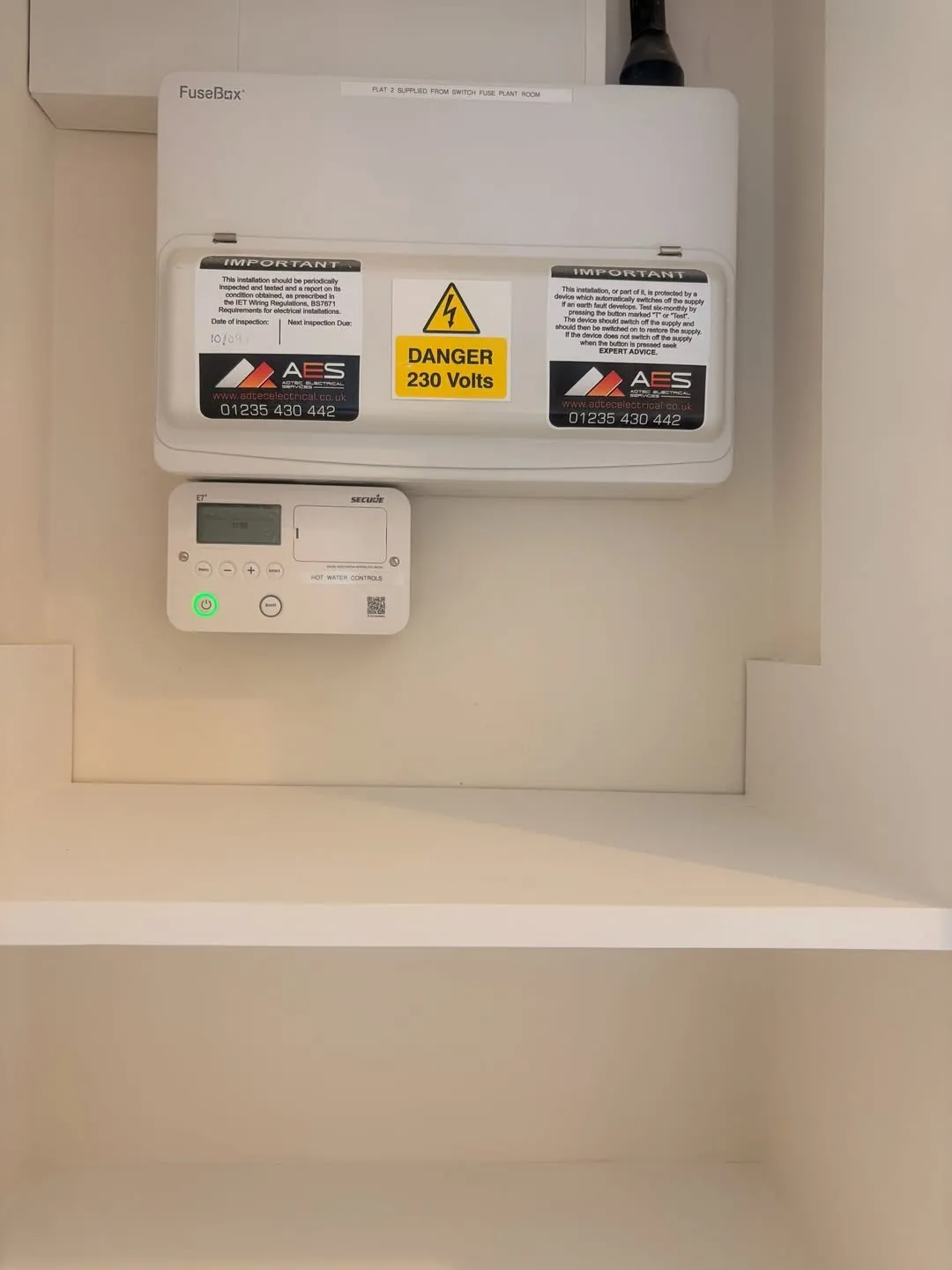
Most people call it the fuse box. Electricians call it the consumer unit. It is the panel, often under the stairs, in a hallway cupboard or in the garage, where the supply from your meter is split into separate circuits for lights, sockets, the cooker, the shower and so on. Each circuit has its own protective device, and the type of protection makes a big difference to safety.
Signs your consumer unit needs replacing
- Rewireable fuses. If you open the cover and see ceramic carriers holding fuse wire, the board is decades old. Fuse wire offers no protection against electric shock, and replacing it with the wrong size is easy.
- No RCD protection. Look for a switch marked RCD, often with a "T" test button. If there isn't one, nothing on the board is designed to cut the power quickly if someone touches a live part.
- A plastic enclosure. Current regulations require new domestic units to be housed in non-combustible material, usually steel. An older plastic box is not automatically dangerous, but it is a sign of age.
- Scorching, buzzing or a burning smell near the unit. Turn off the main switch if you can do so safely and call us.
- A board that no longer copes: no spare ways for a new circuit, or a muddle of add-on boxes beside it.
What RCDs and RCBOs actually do
An RCD (residual current device) constantly compares the current going out on a circuit with the current coming back. If some is leaking away, perhaps through a damaged cable or through a person, it switches off in a fraction of a second. That is what makes it a life-saving device rather than just a fuse.
An RCBO combines that RCD protection with an ordinary circuit breaker in one device, for a single circuit. The advantage is that a fault on one circuit only trips that circuit, not half the house. Many modern boards use RCBOs throughout. Others use a couple of RCDs, each protecting a group of circuits. We will explain the trade-offs for your home when we quote.
What happens on the day
- We confirm the plan with you and check where the consumer unit, the meter and every circuit are.
- The power goes off. For most homes it stays off for most of the working day. Fridges and freezers should be left closed, and anything that needs resetting afterwards (clocks, alarms, routers) can be noted.
- We test the existing circuits. This is important: if a circuit has a fault, a new RCD will keep tripping, so we find out first.
- The old unit is removed and the new one fitted, with each circuit connected and clearly labelled.
- Everything is tested again and the power is restored, usually well before the end of the day.
If testing finds damaged wiring or a fault, we stop and talk to you before going further. Sometimes it is a quick fix. Sometimes it points to a partial or full rewire.
The certificate afterwards
A new consumer unit is a significant change to your installation, so you receive an Electrical Installation Certificate with the test results for every circuit. Keep it with your house documents. A buyer's solicitor may ask for it when you sell, and landlords will want it alongside their next EICR.
After the upgrade
Test your RCDs every few months using the test button. It should click off, and you simply switch it back on. If a new board trips occasionally, it may be catching a fault the old one ignored. Our guide on why an RCD keeps tripping explains the safe checks, and our fault finding service can track it down.